Archive | Sustainable Gardening RSS feed for this section

Patrick Blanc…The Michelangelo of Vertical Gardening….In His Own words

Thanks to botanist and designer extraordinaire, Patrick Blanc, vertical gardening has become one of the hottest trends in gardening. Patrick has transformed what Westerners used to think of as vines climbing up a wall into a mesmerizing and sensual tapestry of plants that titillates your senses.

Watch this interview to see some of Patrick’s creations and hear what this visionary has to say.

If you enjoyed this video, you might want to check out an earlier article I wrote on Vertical Gardening.


Comments { 13 }

Why Teaching Inner City High School Students How To Build Sustainable Green Walls Changes Their Lives

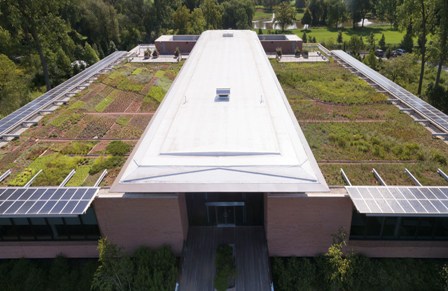
Can you imagine what might happen when you take a group of high school students from a school in the Bronx and teach them the technology and how to build sustainable green walls?  One man, George Irwin, the founder of A Green Roof  did just that…and changed these students lives forever.


THE RESULTS FROM PILOT PROGRAM AT DISCOVERY HIGH SCHOOL

“The natural progression into education has allowed us to use the Mobile Edible Wall Unit (MEWU) as an educational tool. Celebrity teacher Steve Ritz (Discovery High School, Bronx NY) used the MEWU to improve attendance and achieve close to 100% passing regents scores. He credits the Edible Wall for engaging his students for bell to bell instruction. The MEWU is now available complete with a 90 page Unit Plan for instruction, including rubrics, assessments, and core cross over, which all adhere to the National Learning Standards. The family of Green Living Technologies is also the basis for the new High School diploma (2012) being written by George Irwin in collaboration with Jamie Cloud of Cloud Institute.

Read more about Green Living Technologies.

Comments { 3 }

Why You Should Read The 50 Mile Bouquet: Q and A with Debra Prinzing

The 50 Mile Bouquet is one of those books that gardeners (and those who love flowers) should have on their bookshelves. Debra Prinzing has done a stupendous job of inspiring and educating us about the slow flower movement. David Perry’s photographs….as always….don’t disappoint. They capture the sumptuous beauty of the flowers and the emotions on the faces of the growers. Fran Sorin

For our readers who aren’t familiar with you, can you tell them a bit about yourself?

Like many of us in garden writing, I have an eclectic background. Mine combines design and journalism, with a large dose of horticulture thrown in. I have an undergraduate degree in textiles and clothing, which led me to my first job in New York City at Seventeen Magazine in the early 1980s. When I moved back to Seattle, where I had spent three years in college, I worked for $500/month as an assistant editor at a women’s magazine and in marketing for an architectural textile design firm. That’s also when I started freelancing for design trade publications and started thinking about graduate school. In 1987-88, I spent a year at the University of Washington’s graduate school of Communications where I did all my master’s coursework, with a reporting emphasis on Seattle’s emerging fashion industry. While I never obtained my degree, those studies launched me into business journalism and I spent the next decade working for our major local business newspaper, Puget Sound Business Journal (I covered the “chic beats” – architecture, advertising, media, retail, hospitality, graphic design, and apparel manufacturing).

By 1997, while pregnant with my second child, I remember sitting at my desk one day thinking: I’m sick of interviewing dot.coms and CEOs. I want to be a garden writer. That simple utterance reflected the heavy influence of two close friends who were landscape designers; I called them my muses.

So here we are, 15 years later, and thanks to an inherent understanding of design principles; a long tenure as a working journalist; and several years taking horticulture classes at the local community college, I can legitimately call myself a Garden Writer. My specialty is design-related topics and now I spend about 75 percent of my time covering garden-themed stories and 25 percent of my time writing about architecture and interiors.

image

Continue Reading →

Comments { 9 }

Finding Frost

frost on kale leaf

When we go out into the garden to take pictures, we don’t always find what we expect.  So don’t get locked into seeing what you want to see.  See what is.

When my friend Kate Frey suggested I might want to photograph the tapestries of winter vegetables she planted at Lynmar Winery I could hardly wait for the next free morning.  I knew her keen sense of design and plant combinations would be exquisite.  An organic edible garden designed to be an artistic visual treat ?!  Think the Roadrunner cartoons… zeeeeeeeeoooooooowwwwwwwwwwwwwww …. I’m on my way. Continue Reading →

Comments { 15 }

BOLIVIA… 11 NEW RIGHTS FOR NATURE

Normally I would Tweet or link to this article on Facebook. Perhaps you’ve already read about this on another garden blog. In case you didn’t though, this is BIG news. Please pass on to your friends and colleagues……Fran Sorin

Law of Mother Earth expected to prompt radical new conservation and social measures in South American nation

Written by By John Vidal for The Guardian

Bolivia is set to pass the world’s first laws granting all nature equal rights to humans. The Law of Mother Earth, now agreed by politicians and grassroots social groups, redefines the country’s rich mineral deposits as “blessings” and is expected to lead to radical new conservation and social measures to reduce pollution and control industry.

The country, which has been pilloried by the US and Britain in the UN climate talks for demanding steep carbon emission cuts, will establish 11 new rights for nature. They include: the right to life and to exist; the right to continue vital cycles and processes free from human alteration; the right to pure water and clean air; the right to balance; the right not to be polluted; and the right to not have cellular structure modified or genetically altered.

Controversially, it will also enshrine the right of nature “to not be affected by mega-infrastructure and development projects that affect the balance of ecosystems and the local inhabitant communities”.

“It makes world history. Earth is the mother of all”, said Vice-President Alvaro García Linera. “It establishes a new relationship between man and nature, the harmony of which must be preserved as a guarantee of its regeneration.”

The law, which is part of a complete restructuring of the Bolivian legal system following a change of constitution in 2009, has been heavily influenced by a resurgent indigenous Andean spiritual world view which places the environment and the earth deity known as the Pachamama at the centre of all life. Humans are considered equal to all other entities.

Read full article at: The Guardian

Link to video on Bolivia’s Climate Change Wars

Comments { 4 }